February 03, 2026
Dear readers,
This Weekly gives you the chance to go from urban governance in Luanda to siloed tech governance to the sad turn of the United States away from open government to philanthropy trends in Latin America. Plus, we dive deep on trends and accountability concerns in development finance.
But, we start with a welcome reminder of results from a long-running civil society campaign to encourage the U.S. Financial Accounting Standards Board to put in place new tax reporting requirements. This past week, we got the first annual financial statements from major multinational corporations incorporating the new transparency requirements as reported by The Wall Street Journal. Expect much more analysis soon of where big name firms pay tax around the world (and where they don’t.)
Happy reading!
TAI team
What's New
In just six years, Chile shifted from popular demands for deeper democracy to authoritarian nostalgia. Luciano Santander Hoces traces the path in this piece from International Research Group on Authoritarianism and Counter-Strategies.
Energy policy remains vulnerable to special interests seeking to slow the energy transition. Dieter Zinnbauer explores how countries can reverse this trend by better understanding the complex incentives that can harm or help the adoption of renewables, offering practical insights for those pursuing climate accountability.
Toyin Akinniyi argues that advances in African tech are undermined by silos between tech builders, civil society, policymakers, and funders. She highlights efforts to bridge these divides by supporting tech justice actors and initiatives like the AI Collective in Nigeria, helping build ecosystems where collaboration and ethical guardrails increase the chance that technology strengthens democratic governance rather than undermines it.
For civil society groups to successfully leverage the private sector's potential in uplifting democratic principles, they must learn to speak the sector's language. Semuhi Sinanoğlu reflects how strategic engagement with business can advance democratic values and governance reforms.
In a week of ups and downs for the open government movement, Thailand officially joined the Open Government Partnership, committing to transparency, citizen participation, and accountability in governance, just as the United States – one of the founders of the Partnership – officially withdrew.
What freedoms and governance features do people value, and why? Alexander Hudson and Seema Shah examine treaties, constitutions, and public opinion to analyze whether alternative democratic models could support more organic democratization across Africa.
In “Prediction Isn’t Intelligence”, Stephan Schmidt explains why predictive AI poses unique risks in government, showing how seemingly accurate models can turn probabilities into unaccountable decisions. The core issue, he argues, is not performance but governance.
At the Second International Economic Forum for Latin America and the Caribbean, discussions centered on reimagining the future of democracies amid the rise of authoritarian leadership. El País América examines the challenges facing democratic institutions across the region.
For an insight into urban governance, check out the Luanda report of Good Governance Africa, part of their African Cities Profiling project, which aims to enhance understanding of individual cities across the continent with a view to improving government effectiveness and empowering citizens to hold their governments to account.
ESSENTIAL WATCHING:
Accountapreneur, Fatoumata Boubou, has a new documentary film highlighting the voices of communities living around artisanal gold mining sites in the Bougouni region of Mali. The documentary reflects on the social and environmental impacts of artisanal mining and opens space for discussion about what more responsible, sustainable practices could look like in practice. Learn more in Accountability Lab’s monthly update.
From Our Members
OPEN SOCIETY FOUNDATIONS: Writing in OSF's Ideas Letter, Lily Lynch examines Michel McFaul's new book "Autocrats vs. Democrats," which frames the relationship between democracy and autocracy as a gladiatorial fight to the death. Lynch offers a skeptical assessment, suggesting that the liberal-democratic project has lost both its aesthetic vitality and its conceptual coherence.
PACKARD FOUNDATION: Highlights the central role of civil society in sustaining democracy. In a recent reflection for the Stanford Center on Philanthropy and Civil Society (PACS) blog, President and CEO Nancy Lindborg underscores why investing in the people and structures that hold civic life together is essential for resilient democratic systems.
ESSENTIAL WATCHING:
This teaser offers a first look at the inaugural edition of The Global South House, a platform led by philanthropic actors from the Global South to influence funding flows and power dynamics in favor of socio-environmental justice. The first edition brought together more than 40 socio-environmental justice funds from Latin America, Africa, and Southeast Asia, connecting community-based, territorial, Indigenous, feminist, and youth-led initiatives.
TOOLS AND TRENDS FOR FUNDERS
The Mott Foundation is celebrating 100 years of impact, including significant contributions to strengthening civil society infrastructure and civic space worldwide. The foundation's centennial provides an opportunity to reflect on the evolution of strategic philanthropy and its role in supporting democratic institutions.
This new brief by TAI alumna Florencia Guerzovich documents how Accountability Lab responded in practice during 2025 following Democracy, Rights and Governance aid cuts. It captures a set of choices made under constraint—about where to act, how to stay connected, and what capacities mattered most when familiar assumptions no longer held.
WINGS offers a preview of its "Philanthropy Trends in Latin America and the Caribbean 2025" report, highlighting eight trends that illustrate how philanthropic practice, power, and priorities are shifting across the region. The analysis reveals how funders are adapting to changing political and economic contexts while working to shift power dynamics.
In a Philea piece, Jim Cooke reflects on five years of the UK’s Funders Collaborative Hub, and points out what enables or hinders effective funder collaboration and how shared infrastructure can help turn collaboration into lasting impact.
ESSENTIAL READING:
In “The Low-Cost AI Illusion” for Stanford Social Innovation Review, Phillip Olla challenges the idea that today’s “democratized” AI is here to stay. He argues that the current era of free or subsidized tools is a temporary phase, and that as AI becomes core infrastructure, its real economic costs will reshape access, equity, and public-interest work. Can social sector organizations shape this next phase or will they be left to adapt on unequal terms?
Focused Topic of the Week
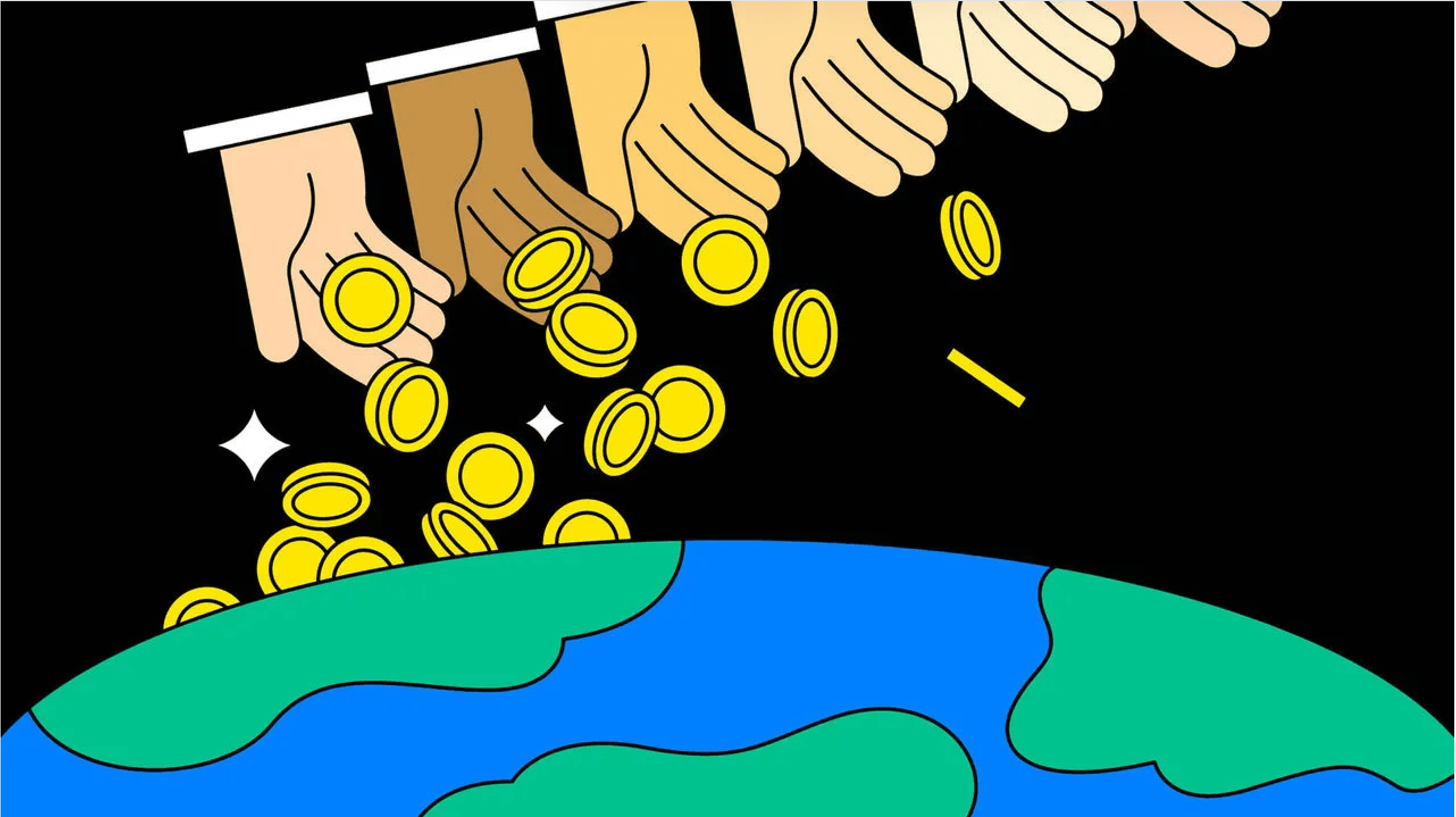
Reversals in development finance flows exacerbate governance challenges
The landscape of development finance has undergone a dramatic transformation over the past decade, as revealed in ONE Data’s new report "The Great Reversal". The most striking shift has been China's reversal from net provider to net extractor of capital. A decade ago, China transferred $48 billion to low- and lower-middle-income countries through official and private lending channels, but today it extracts $24 billion from these same nations. Servicing debt is a growing challenge for many economies. Meanwhile, private finance has virtually disappeared from the development landscape, with public and publicly guaranteed long-term external debt from private sources plummeting from $115 billion in net new resources from 2010 to 2014 to just $7.3 billion over the last five years.
Bilateral flows have also quietly retreated and cuts to Official Development Assistance are set to deepen this decline from 2025 onward. As Eurodad highlights in a new report they worry that modernization of ODA processes risks leaving the Global South behind. They call for a “genuine overhaul of the aid system… through an inclusive, transparent and democratic process that fully involves Global South countries, civil society and all development actors as equal partners.”
Amid cuts from other forms of finance, multilateral institutions have emerged as the bedrock of development finance, now accounting for 56% of net flows compared to just 28% a decade earlier. However, local civil society groups worry about weakening of hard won safeguards as the World Bank Group launches a task force on integrating its accountability mechanisms. This follows the Asian Infrastructure Investment Bank recent revision of its accountability mechanism, and in civil society are concerned. Groups such as Accountability Counsel are among those questioning changes following alleged human rights abuses connected to a tourism development project in Indonesia.
Authors call for a genuine overhaul of the aid system through an inclusive, transparent, and democratic process that fully involves Global South countries, civil society, and all development actors as equal partners.
In the meantime, countries are turning to all potential domestic resources. Giulia Mascagni of the International Center on Tax and Development makes a clear case that taxing smarter is the key to thriving in an increasingly post-aid world. Of course, it would also help to reduce the volume of illicit financial flows that further deplete lower income country finances. The United Nations estimates that $88.6 billion per year leave Africa in the form of capital flight. As Philip Augar's review of Oliver Bullough's new book reminds us, the underground world of money laundering runs into trillions of dolars and government failures to address it compound the challenges facing developing countries. Bullough explains how the compliance function has become more about avoiding getting fined than stopping money laundering. No doubt Ricardo Soares de Oliveira would agree. His latest paper looks at the diversification of Africa’s offshore links, notably to Asian jurisdictions such as Dubai, Hong Kong, and Singapore. The dynamics of these links remain poorly researched despite their rising significance for Africa’s deepening relationship with Asia.
JOBS
Multiple openings - Hewlett Foundation
Multiple openings - MacArthur Foundation
Multiple Openings - Ford Foundation
Multiple Openings - Hilton Foundation
Multiple Openings - Gates Foundation
Multiple Openings - Transparency International
Multiple Openings - Social Action, Development Cooperation, Culture, Disability, and Health Sectors in Spain
Multiple Openings - National Endowment for Democracy (NED)
Multiple Openings - Aig-Imoukhuede Foundation
Multiple Openings - European Center for Not-for-Profit Law
Consultant, South Africa case study on tax and data governance - ICTD
Program Officer Legal Strategies - Sequoia Foundation
Europe Movement Support Coordinator & Coach - Social Movement Technologies (SMT)
Gerencia de Incidencia y Articulación - Movilizatorio.
Director of Philanthropy Knowledge - Alliance Magazine. Deadline: February 6, 2026.
Community Manager - People Powered.Deadline: February 6, 2026.
Fundraising Manager - Forest Peoples Programme. Deadline: February 8, 2026.
Analista de Comunicação Digital (Conteúdo e Redes Sociais) - Fundo Casa Socioambiental. Deadline: February 8, 2026.
Interim Development Manager (Consultancy) - International Budget Partnership. Deadline: February 9, 2026.
Finance and Operations Coordinator - EDGE Funders Alliance. Deadline: February 20, 2026.
Executive Director - FACT Coalition. Deadline: February 27, 2026.
CALLS
Apolitical in partnership with the Open Government Partnership offers a free course for public servants on Open Government: How to Be Transparent, Participatory and Accountable.
Knight Center For Journalism: Free, on-demand online course on "A better way to cover civic life through listening" for journalists in all regions, offered by the Solutions Journalism Network.
New Democracy Fund - Armenia 2026 Call for proposals to support civil society organizations, youth groups, and independent media in Armenia's regions outside Yerevan. Deadline: February 11, 23:59 CET 2026.
The call for workshop proposals for the 2026 International Anti-Corruption Conference (IACC) is now open. Under the theme "Igniting the Power of Integrity," the conference will take place in Punta Cana, Dominican Republic, from December 1-4, 2026. Professionals, civil society groups, activists, journalists, academics, and practitioners worldwide are invited to submit proposals by February 23, 2026.
Two ScaleDem open calls are now live through 31 March 2026, offering eligible organizations across Europe and beyond funding, mentorship and peer learning to scale democratic innovations. The Piloting Programme supports bold new ideas with up to €100,000, and the Twinning Programme offers up to €65,500 for mentor–mentee communities adapting proven approaches.
CALENDAR
Not If, But How: Climate, Movements, and Transformative Change. February 3, 10, and 17, 2026.
Intergovernmental Negotiating Committee on the United Nations Framework Convention on International Tax Cooperation (4th session, UN HQ NYC). February 2-3 and 5-13.
Enhancing transparency, inclusion and accountability in climate finance: lessons from the Green Accountability Platform. February 3 | 2:00 PM Amsterdam/Berlin.
EU Tax Observatory hosts "From Secrecy to Transparency: The End of Hidden Wealth?" (Paris School of Economics). February 3-4.
ECOSOC Special Meeting on Financial Integrity (UN HQ NYC). February 4.
The Global Economy in 2026: Resilience, Risks, and Policies. February 4 | 2:00 PM DC - 3:00 PM DC | 7:00 PM London - 8:00 PM.
RINGO Project: Shifting Power in 2026. Wednesday, February 4 | 13:00-14:15 GMT
Briefing For Social Justice Funders and Groups by Social Movements Technologies (SMT). February 4 & 5.
7th Meeting of the Community of Practice on Tax Expenditures (with IDOS, ATI, Tax Expenditures Lab, and CEP). February 5.
Assessing the Impacts of AI in the Public Sector: Practical Examples from Civil Society and Government - Open Government Partnership webinar. February 5, 2026 | 4:00 PM Amsterdam time.
Public Trust in Tax 2025: Asia and Beyond - OECD launch of a joint report presenting survey results on public perceptions of tax systems across 29 countries, with special focus on Asia. February 11, 2026 | 8:00-9:30 AM CET.
ATAF Country Correspondent Conference, Pretoria. February 18-20.
Center for Effective Philanthropy: A Sector in Crisis—How Nonprofits and Foundations are Navigating Challenge. Wednesday, February 19 | 12:00 PM ET
IFA hosts "Transfer Pricing Adjustments and VAT: Bridging the Gap Between Direct and Indirect Taxes". February 24 | 3:00 PM CET.
Research symposium on "Evidence and Impact of Beneficial Ownership Transparency" (Brighton, UK and online, hosted by BOT Working Group, Open Ownership, and Centre for the Study of Corruption). February 26-27.
People Powered 2026 Convening - A global gathering on participatory democracy. Nairobi, Kenya. March 2–5, 2026.
EU Tax Symposium 2026 on "The future of taxation: inequality and growth in the global economy" (Brussels). March 16-17.
2026 Global Philanthropy Leadership Summit. March 18-20, 2026 | San Francisco, CA.
Committee of Experts on International Cooperation in Tax Matters (32nd session, UN HQ NYC). March 23-26.
2026 OECD Global Anti-Corruption & Integrity Forum (GACIF). March 23-27, 2026 | Paris, France.
Reimagining Nonprofits and Philanthropy - Virtual book launch with Vu Le from Nonprofit AF, celebrating the vital nonprofit sector. February 25, 2026 | 10:00 AM PST / 1:00 PM EST / 6:00 PM GMT.
Special Meeting of ECOSOC on International Cooperation in Tax Matters (UN HQ NYC). March 27.
Igniting Hope: The Inaugural Ottawa Civic Space Summit. Registration closes April 10, 2026. Event from April 21-23, 2026.
Othering & Belonging Conference, Louisville, Kentucky, March 31-April 1, 2026.
UNESCO World Press Freedom Day 2026, Lusaka, Zambia. May 4-5.
RightsCon 2026, Lusaka, Zambia. May 5-8.
Rabat, Morocco: On Think Tanks Conference, focusing on "Think Tanks and Trust." 19–21 May 2026.
WINGSForum 2026 in Montreal under the theme "ACT – Activate, Collaborate, Transcend." Save the date, more details to follow in early 2026. September 28-30, 2026.
International Anti-Corruption Conference (IACC) in Punta Cana, Dominican Republic. December 1-4, 2026.
We’d love to hear from you on how we can further improve TAI Weekly to better serve your needs in program management on the transparency, accountability, improved grantmaking and civic space. Please direct your feedback to [email protected] or