January 27, 2026
Dear readers,
At last week’s World Economic Forum gathering, coverage focused on the contrast between the speeches of Mark Carney and Donald Trump, while behind the scenes AI companies were hustling for investment and there was little talk of public goods. Davos has always been elitist, but has been an incubator of standards in the past. Not so much this time, and Katharina Pistor argues we should shutter what she calls a platform for anti-democratic deal-making.
See our Focused Topic for more on economic power translating into political influence. In the meantime, read up on everything from global parliaments to beneficial ownership in Chile to ideas for resourcing social justice.
Happy reading!
TAI team
What's New
Last week, we covered Uganda’s election results, which secured another term for the president, now 40 years in power. This outcome echoes Achille Mbembe’s assessment that substantive democracy is largely absent across much of Africa, driven by a failed model of “auto-colonization” in which elites treat citizens as subjects, undermining democratic legitimacy and citizen agency.
One year after Executive Order 14169 paused and reviewed U.S. foreign assistance, Kristie Evenson argues that democracy, human rights, and governance support now operates in a far more constrained landscape, marked by political hostility, reduced and volatile funding, and transactional approaches with significant consequences for civil society worldwide.
Eurovision News Spotlight has released a professional guide for journalists on automating evidence collection from public websites, outlining practical workflows for tracking changes, capturing metadata, and preserving proof through digital fingerprints, supporting accountability journalism in a fast-changing information environment.
A new global survey commissioned by Democracy Without Borders finds broad public support for a citizen-elected world parliament to address global issues. Is it sign of growing appetite for new forms of global democratic governance? Rich Wilson would argue “yes.” His analysis explores whether ordinary citizens can change how the world is governed.
A new paper by the BLIS Collective, argues that narrative research should not only seek to better understand how ideas and perceptions shift, but be designed to increase the narrative power of movement actors working to shift the material conditions of communities. Want more on narratives? Take a look at TAI's report “The stories we tell", a study on how civil society reshapes narratives to strengthen trust and democracy.
Keseb has introduced the second cohort of its Democracy Fellowship, twelve democracy entrepreneurs and organizations from Brazil, South Africa, and the United States. The Fellowship provides deep support to leading national democracy entrepreneurs and their organizations working to reimagine democratic foundations.
A new Spanish-language paper examines lessons from Chile and Mexico's work on transparency of beneficial ownership, finding that "the lack of conditions for adopting a centralized registry can be compensated for by a progressive approach based on strategic sectors," including public procurement.
Democracy Next has released highlights from launching "Scaling Democratic Innovations," including the full paper, recording, and key takeaways on infrastructure, ecosystems, and long-term democratic change. The work explores how democratic innovations can expand while maintaining their essential character.
ESSENTIAL WATCHING:
Want to catch up on all things tax? Check out recordings from recent tax events: the OECD on the global minimum tax; the Tax Justice Network on using administrative data for tax research; an LSE seminar with Marlies Glasius on billionaire tax avoidance; the World Bank on how curbing corruption and environmental crime could raise to 1.7% of GDP; the Institute of Development Studies hosting Chenai Mukumba on more inclusive, equitable tax and multilateral systems, and the Tax Expenditures Lab, the Council on Economic Policies, and the German Institute of Development and Sustainability (IDOS) launch of 2025 Flagship Report on Tax Expenditure Effectiveness and release of Global Tax Expenditures Transparency Index (GTETI).
From Our Members
HILTON FOUNDATION: Has announced the appointment of Ribka Fox as its new Vice President and Chief People Officer. In this role, she will lead the Foundation’s Talent and Culture department, bringing her experience to support and strengthen the organization’s people and workplace culture.
HUMANITY UNITED: Emphasized the importance of convening at the 14th Global Investigative Journalism Conference (GIJC25) in Kuala Lumpur, where 1,500 journalists and media leaders from 135 countries gathered to strengthen collaboration and solidarity in support of investigative journalism amid rising global threats.
MACARTHUR FOUNDATION: Announced $10 million in new grants to strengthen the humanities, responding to growing pressures on the field, including threats to academic freedom and the erasure of vital histories. The funding supports organizations that investigate and illuminate human culture, thought, and experience.
TOOLS AND TRENDS FOR FUNDERS
Grace Maingi from Kenya and Novi Meyanto from Indonesia shared their perspectives on financial sustainability and civic space with Lucia Nader. Both are supporting NGOs and movements to strengthen their financial resilience, a path that often includes diversifying funding sources but is never limited to that.
Marième Daff, executive director at Firelight Foundation, reflects on findings from EPIC-Africa's report "From Fragility to Fortitude." While funding cuts threaten organizational survival, the report also points to a clear blueprint: flexible capital, stronger ecosystems, co-created partnerships, and African-led innovation. Inherently African, community-driven philanthropy offers the most resilient path forward.
India's private philanthropy reached INR 16 billion ($177 million) in the 2024 financial year and is projected to grow at 10-12 percent annually, a fivefold increase over the past decade. However, Ami Misra and Mahima Sharda argue that without a strong support system, this generosity risks falling short of its potential. The giving infrastructure in India remains fragmented and under-invested, missing out on its potential.
The Alternative Resourcing for Change and Solidarity Roundtable has launched its website as a space where leaders, funders, advocates, and partners can share new ideas about resourcing social justice and human rights organizations and co-create a new vision for the sector's future.
ESSENTIAL READING:
Publish What You Fund has released an updated Multilateral development climate finance dataset covering around 6,500 climate-tagged investments, amid concerns that $71 billion of the $437 billion claimed by multilateral development banks between 2021 and 2024 cannot be traced to projects. In a new blog, Ella Remande-Guyard explains why this transparency gap matters and what the available data reveals.
Focused Topic of the Week
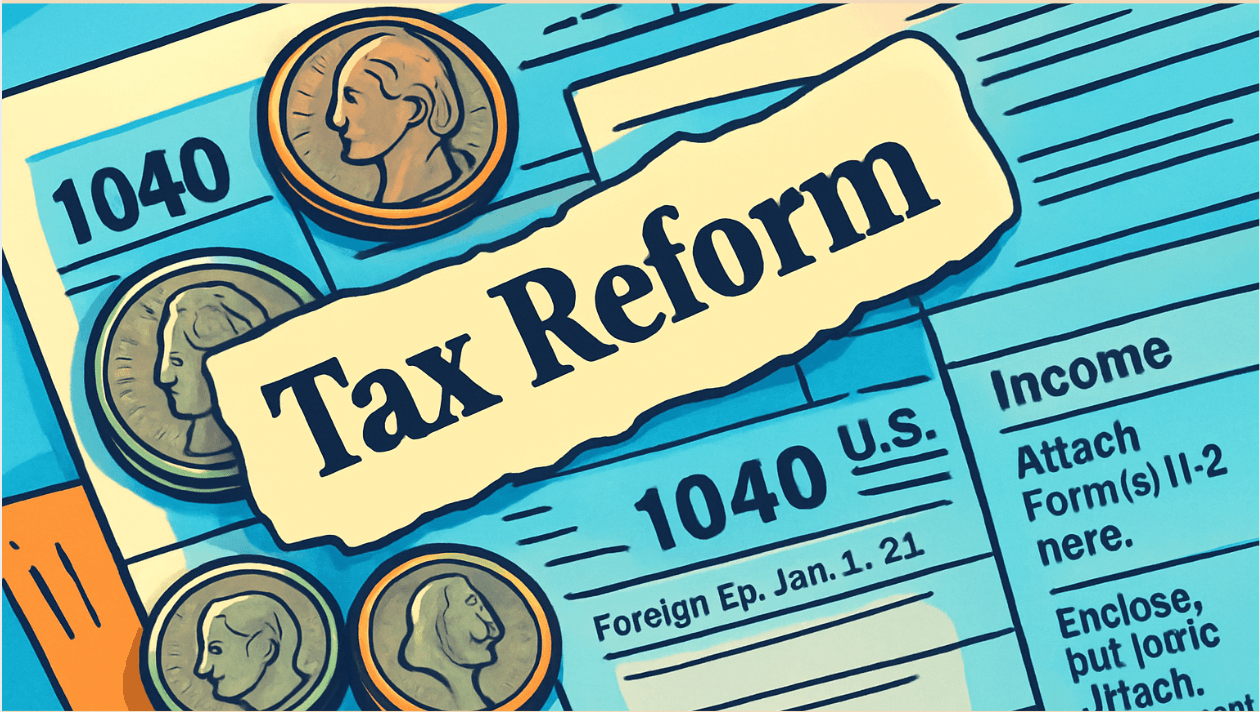
Checking Pockets While Billions Flow: Tax Reform Confronts the Architecture of Extraction
This danger is not hypothetical. Oxfam's Resisting the Rule of the Rich documents how billionaire wealth grew three times faster than its five-year average in 2025, reaching $18.3 trillion, even as one in four people face food insecurity and nearly half the world lives in poverty. The wealthy don't simply accumulate—they translate economic power into political influence, with billionaires over 4,000 times more likely to hold office than ordinary people. This creates a feedback loop where those who benefit most from existing arrangements shape the rules to preserve their advantages, including tax policies that favor capital over labor, inheritance over effort, and mobility over place.
The international tax architecture reflects these power dynamics. Negotiations on the UN Framework Convention on International Tax Cooperation represent an opportunity to build more equitable global rules, with the fourth Intergovernmental Negotiating Committee session scheduled for February 2-13 in New York (materials available here). Yet whether this process delivers meaningful change depends on whether it addresses fundamental questions of ownership, extraction, and power.
Nigeria is moving toward greater tax reliance. In theory, taxation strengthens the social contract—governments become accountable to citizens who fund them, and public services flow from collective contribution. Yet as The Guardian reports, Nigerians are "checking their pockets" as new policies take effect, suggesting anxiety about who will bear the burden. Without progressive design and robust enforcement against elite tax avoidance, taxation becomes another mechanism of inequality rather than its remedy.
Robin Jaspert's research reveals that over half of stock-listed companies across Africa's eight largest equity markets are foreign-owned, with Zambia's figure reaching 87%. This matters because stock markets channel capital flows, influence corporate governance, and shape who benefits from economic growth. When ownership resides elsewhere, profits flow outward, tax bases erode, and domestic populations bear costs while reaping fewer rewards.
These developments illuminate a fundamental tension in contemporary development: the promise of taxation as a tool for equity confronts the reality of economic structures designed to concentrate wealth and power. Addressing inequality requires confronting not just how much is taxed but who owns what, who decides, and whose interests economic systems ultimately serve.
JOBS
Multiple openings - Hewlett Foundation
Multiple openings - MacArthur Foundation
Multiple Openings - Ford Foundation
Multiple Openings - Hilton Foundation
Multiple Openings - Gates Foundation
Multiple Openings - Transparency International
Multiple Openings - Social Action, Development Cooperation, Culture, Disability, and Health Sectors in Spain
Multiple Openings - National Endowment for Democracy (NED)
Multiple Openings - Aig-Imoukhuede Foundation
Multiple Openings - European Center for Not-for-Profit Law
Program Officer Legal Strategies - Sequoia Foundation
Europe Movement Support Coordinator & Coach - Social Movement Technologies (SMT)
Director of Philanthropy Knowledge - Alliance Magazine. Deadline: February 6, 2026.
Community Manager - People Powered.Deadline: February 6, 2026.
Fundraising Manager - Forest Peoples Programme. Deadline: February 8, 2026.
Executive Director - FACT Coalition. Deadline: February 27, 2026.
CALLS
Apolitical in partnership with the Open Government Partnership offers a free course for public servants on Open Government: How to Be Transparent, Participatory and Accountable.
Knight Center For Journalism: Free, on-demand online course on "A better way to cover civic life through listening" for journalists in all regions, offered by the Solutions Journalism Network.
Mozilla Foundation is seeking nominations to identify the next generation of technology leaders through its 2026 Mozilla Fellows program. Nominations Close on January 30, 2026.
The Extractive Industries Transparency Initiative is accepting proposals for partner sessions at its Global Conference set for June 24-25 in the Philippines. Deadline is January 30, 2026.
Keseb’s Democracy Innovation Lab is backing early-stage ideas that reimagine the foundations of democracy. Its first iLab will support 10 community-building initiatives that strengthen inclusion and cross-group belonging. Submit a pitch by February 2, 2026 (11:59 PM ET).
The call for workshop proposals for the 2026 International Anti-Corruption Conference (IACC) is now open. Under the theme "Igniting the Power of Integrity," the conference will take place in Punta Cana, Dominican Republic, from December 1-4, 2026. Professionals, civil society groups, activists, journalists, academics, and practitioners worldwide are invited to submit proposals by February 23, 2026.
Two ScaleDem open calls are now live through 31 March 2026, offering eligible organizations across Europe and beyond funding, mentorship and peer learning to scale democratic innovations. The Piloting Programme supports bold new ideas with up to €100,000, and the Twinning Programme offers up to €65,500 for mentor–mentee communities adapting proven approaches.
CALENDAR
Reclaim the Economy Week. 26 January - 1 February 2026.
Not If, But How: Climate, Movements, and Transformative Change. January 27, February 3, 10, and 17, 2026.
Launch of research report examining safeguarding in grant-making. Wednesday, January 28 | 10:00 EST / 15:00 GMT / 20:30 IST
Track II COP30 Reflections: Advancing Indigenous-Led Climate Action from Belém. January 28 | 11:00 AM EST.
Multi-Stakeholder Dialogue on the UN Framework Convention on International Tax Cooperation (online). January 29 | 8:00 AM ET.
Webinar: Unpopular Rulings, Unprecedented Retaliation - And How We're Fighting Forward (US focus). January 29 | 1:00 PM ET.
Intergovernmental Negotiating Committee on the United Nations Framework Convention on International Tax Cooperation (4th session, UN HQ NYC). February 2-3 and 5-13.
Enhancing transparency, inclusion and accountability in climate finance: lessons from the Green Accountability Platform. February 3 | 2:00 PM Amsterdam/Berlin.
EU Tax Observatory hosts "From Secrecy to Transparency: The End of Hidden Wealth?" (Paris School of Economics). February 3-4.
ECOSOC Special Meeting on Financial Integrity (UN HQ NYC). February 4.
The Global Economy in 2026: Resilience, Risks, and Policies. February 4 | 2:00 PM DC - 3:00 PM DC | 7:00 PM London - 8:00 PM.
RINGO Project: Shifting Power in 2026. Wednesday, February 4 | 13:00-14:15 GMT
Briefing For Social Justice Funders and Groups by Social Movements Technologies (SMT). February 4 & 5.
7th Meeting of the Community of Practice on Tax Expenditures (with IDOS, ATI, Tax Expenditures Lab, and CEP). February 5.
ATAF Country Correspondent Conference, Pretoria. February 18-20.
Center for Effective Philanthropy: A Sector in Crisis—How Nonprofits and Foundations are Navigating Challenge. Wednesday, February 19 | 12:00 PM ET
IFA hosts "Transfer Pricing Adjustments and VAT: Bridging the Gap Between Direct and Indirect Taxes". February 24 | 3:00 PM CET.
Research symposium on "Evidence and Impact of Beneficial Ownership Transparency" (Brighton, UK and online, hosted by BOT Working Group, Open Ownership, and Centre for the Study of Corruption). February 26-27.
People Powered 2026 Convening - A global gathering on participatory democracy. Nairobi, Kenya. March 2–5, 2026.
EU Tax Symposium 2026 on "The future of taxation: inequality and growth in the global economy" (Brussels). March 16-17.
2026 Global Philanthropy Leadership Summit. March 18-20, 2026 | San Francisco, CA.
Committee of Experts on International Cooperation in Tax Matters (32nd session, UN HQ NYC). March 23-26.
2026 OECD Global Anti-Corruption & Integrity Forum (GACIF). March 23-27, 2026 | Paris, France.
Special Meeting of ECOSOC on International Cooperation in Tax Matters (UN HQ NYC). March 27.
Igniting Hope: The Inaugural Ottawa Civic Space Summit. Registration closes April 10, 2026. Event from April 21-23, 2026.
Othering & Belonging Conference, Louisville, Kentucky, March 31-April 1, 2026.
UNESCO World Press Freedom Day 2026, Lusaka, Zambia. May 4-5.
RightsCon 2026, Lusaka, Zambia. May 5-8.
Rabat, Morocco: On Think Tanks Conference, focusing on "Think Tanks and Trust." 19–21 May 2026.
WINGSForum 2026 in Montreal under the theme "ACT – Activate, Collaborate, Transcend." Save the date, more details to follow in early 2026. September 28-30, 2026.
International Anti-Corruption Conference (IACC) in Punta Cana, Dominican Republic. December 1-4, 2026.
We’d love to hear from you on how we can further improve TAI Weekly to better serve your needs in program management on the transparency, accountability, improved grantmaking and civic space. Please direct your feedback to [email protected] or