June 2, 2026
Dear readers,
In Paris last week, there was much discussion of how to navigate high debt, rising spending demands and high borrowing costs at the OECD’s Forum on Restoring Public Finances. And we were glad to see that a new report released for the event highlights the importance of securing public buy-in for fiscal policies. Its messages, including demystifying budgets and fostering genuine citizen engagement, resonate well with lessons from years of programming supported by TAI members and reinforce our call for investing in accountable fiscal ecosystems.
Now, on to the rest of the latest research, news, jobs and events on everything from digital rights to accountable green finance to debt songs and a deep dive on illicit finance.
Happy reading!
TAI team
What's New
The Digital Democracy Initiative examines what civil society actors need to continue their work, strengthen their organizations, and respond to today’s challenges in practical and sustainable ways. Drawing on research across Eastern Europe and Central Asia, the report highlights how organisations are navigating shrinking civic space, funding pressures and digital threats amid democratic backsliding.
Mfoniso-Anita Chris Xael reflects on how dominant models of progress, built around extraction and accumulation, may be driving environmental degradation. She is convinced that ecological and climate justice are not “environmental concerns.” They are questions about power, governance. About whose lives are protected.
Colombia’s Youth Councils were created to give young people a formal role in democratic decision-making. Fundación Corona examines what these bodies can reveal about the state of democracy, using recent electoral cycles to explore participation, representation and political inclusion among young people.
Eduardo Bertoni argues that access to reliable and timely public information is not only a democratic value but also an economic asset. He explores how transparency can create a more stable environment for investment and access to international credit.
A digital rights campaign in the Netherlands has successfully challenged the way Facebook and Instagram curate content. Following a major court victory, users can now choose chronological feeds instead of content selected by engagement-driven algorithms, putting greater control over online information and public debate back into users’ hands.
Financial markets still invest heavily in activities that harm the environment, while many green projects struggle to secure funding. Soren Hilbrich and Kathrin Berensmann argue “transparency alone is insufficient to turn the financial sector from a driver of environmental crises into a lever for the green transformation.” Adapting credit and tax policies to shift incentives will be important.
The #KeepItOn coalition documented a record 313 internet shutdowns in 2025, highlighting the growing use of digital blackouts to restrict access to information and communication. Among the most striking trends was the increase in shutdowns targeting satellite internet systems, which jumped from four cases in 2024 to 18 in 2025.
Writing in The Financial Times, Karen Kornbluh highlights a growing accountability gap around AI and argues that citizens and elected representatives have a shared responsibility to update governance mechanisms. The goal, she says, is to ensure that AI rewards innovation without allowing companies and technologies to evade public accountability.
Hungary’s experience suggests that mayors can play a critical role in sustaining trust and democratic resilience when national institutions come under strain. This article explores what American local leaders can learn from Budapest about strengthening civic engagement and defending democratic norms.
Reconstruction, social stabilization and economic recovery will require Middle Eastern governments to mobilize far more revenue than in the past. Sanjeev Gupta explores how countries can move beyond hydrocarbon dependence and build more resilient tax systems while keeping citizens on board.
As governments race to regulate artificial intelligence, questions of accountability and redress are often overlooked. Nate Edwards argues that effective AI governance depends not only on rules and standards, but also on strong courts, oversight bodies and justice systems capable of responding when people are harmed.
Drawing on a review of 221 academic, policy and industry sources, The Data Tank examines how generative AI is reshaping public-interest media. The findings highlight growing concerns around content extraction, declining audience traffic and concentration of informational power, prompting calls for stronger regulatory action and collective strategies to protect media pluralism and democratic accountability.
ESSENTIAL LISTENING
The Thank You Democracy podcast speaks with Dr. Justin E. Lane about how artificial intelligence, human behaviour and online narratives are reshaping democratic life. The conversation explores the challenges of polarization, declining trust and fragmented information environments across Europe.
From Our Members
MACARTHUR FOUNDATION: Drawing on lessons from the Foundation’s On Nigeria Program, Amina A. Salihu’s new book, Leading With Our Humanity, explores how gender equity, disability inclusion, civic engagement and accountability can contribute to more inclusive communities and institutions.
FORD FOUNDATION: Humanity AI has announced more than $18 million in pooled funding for 12 organizations working to shape the societal impact of artificial intelligence. The grants support efforts to strengthen democratic institutions, protect workers’ rights, advance public-interest journalism and improve educational outcomes in the age of AI.
ESSENTIAL WATCHING:
What if a song could explain debt, inequality and the global financial system? This music video by Latindadd, performed by Peruvian singers, uses humour and sharp lyrics to challenge conventional narratives about who owes whom in the global economy.
TOOLS AND TRENDS FOR FUNDERS
“Five-Year Grants Won’t Fix a Fifty-Year Problem”, writes Glen Galaich, CEO of the Stupski Foundation. He reflects on the fact that social change rarely follows grant cycles and calls on funders to support ideas, movements and systems change efforts over decades rather than years.
Many organizations talk about systems change while continuing to fund short-term, siloed projects. This reflection explores why the development sector’s challenges may be structural rather than financial, and what a more adaptive, long-term approach to funding could look like.
A new wave of AI-driven wealth could reshape the future of philanthropy. Nan Ransohoff argues that while foundations linked to the AI sector may soon be distributing billions of dollars annually, the sector currently lacks the talent and institutional capacity needed to make the most of that opportunity.
Samuel Thorpe explores emerging economic research that could help explain why policies often have different effects across places and over time. The findings may give policymakers (and funders) better tools to design interventions tailored to local contexts and achieve more effective outcomes.
ESSENTIAL LISTENING:
Who really owns the companies moving money around the global economy? NPR’s Planet Money explores the growing push to roll back the Corporate Transparency Act and why transparency advocates warn that doing so could make it harder to uncover corruption, money laundering and illicit financial flows.
Focused Topic of the Week
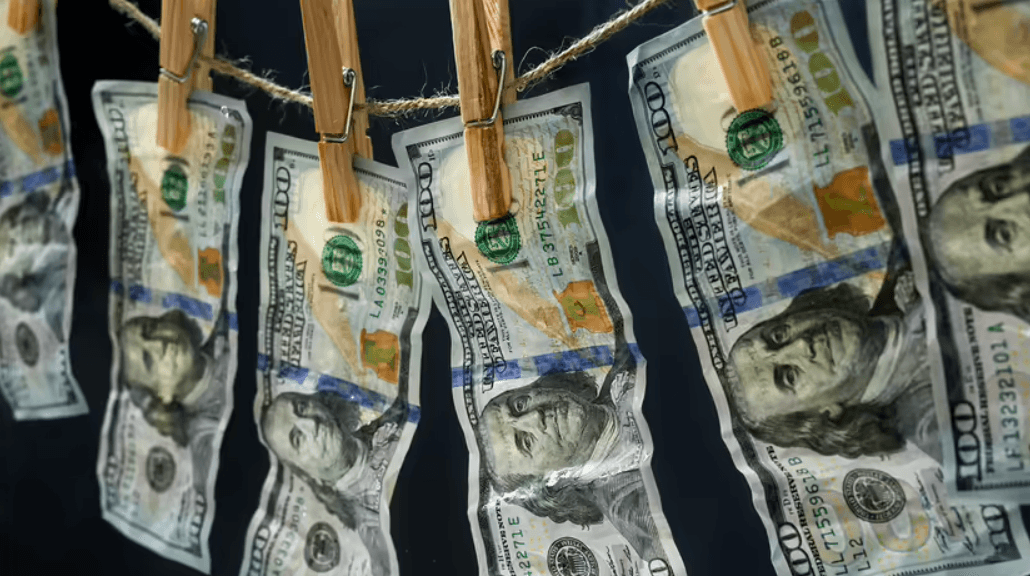
A few things we already know about dirty money
Last week, we highlighted remarks by UK Deputy Prime Minister David Lammy, who described illicit finance and corruption as “one of the great progressive causes of our times.” Days later, the UK government announced a delay to its Illicit Finance Summit, prompting criticism from civil society organizations and calls to use the extra time to strengthen, rather than postpone, action against dirty money. Underlying many of these reactions is a simple point: the challenge is no longer understanding the problem, but responding to it.
The UK itself has produced extensive evidence showing how illicit financial flows divert resources away from public services, weaken trust in institutions and undermine accountability. A new report from Finance Innovation Lab argues that weaknesses in transparency, enforcement and financial regulation continue to leave the country vulnerable to money laundering and other forms of financial crime.
Beyond the UK, the picture looks strikingly familiar. Recent OCCRP investigations show how opaque financial systems can transform public resources into private wealth while shielding those responsible from scrutiny. The WorldClear Files reveal how millions of dollars were moved on behalf of sanctioned oligarchs and politically connected individuals through a New Zealand financial services firm. Another investigation traces how funds intended to purchase essential medicines in the Republic of Congo were allegedly diverted through shell companies and used to finance property purchases in France, leading to convictions for three members of the president’s family.
If there is a common lesson across these stories, it is that dirty money thrives where transparency and oversight are weakest. Transparency International’s Knowledge Hub highlights the importance of early detection, stronger controls and accountability mechanisms in public procurement. The evidence increasingly points in the same direction: the question is less about what we know than whether governments, institutions and citizens are willing to act on it.
JOBS
Multiple openings - Hewlett Foundation
Multiple openings - MacArthur Foundation
Multiple Openings - Gates Foundation
Multiple Openings - Social Action, Development Cooperation, Culture, Disability, and Health Sectors in Spain
Multiple Openings - UNCAC Coalition
Multiple Openings- Equality Now Jobs
Internships - International Accountability Project
Director of Global Affairs - Sequoia Climate Foundation
Director, Strategic Communications Network – Global Fund for a New Economy (GFNE).
Policy Advisor for Natural Resource Justice - Oxfam America
Senior Director, Critical Minerals and Community Positive Energy Transition, World Wildlife Fund
Senior Program Officer- Democracy Fund
Associate Director, Global Energy Transition Initiative - ClimateWorks Foundation
Director Environment Programme (Geneva)- Oak Foundation
Project Manager- Communications and Outreach - Foundations 20
Consultant- Proyecto Mujeres y Colectivas como Agentes de Cambio por el Trabajo Decente en México (Fundación Avina)
CALLS
People Powered is accepting applications for two global programmes offering funding and mentorship to democracy changemakers working to strengthen participation and civic engagement worldwide.
Re-D Fund is now accepting applications for Cohort 2 of the Reimagining Futures for Digital Democracy fund. The initiative supports civil society organisations, collectives and networks working to strengthen digital democracy, civic space and organisational resilience across East and Southeast Asia. Deadline: 5 June 2026.
The European Endowment for Democracy provides rolling funding for local democracy organizations in the Eastern Partnership, Middle East and North Africa, and Western Balkans & Turkey.
The Fifth Element invites blog contributions on systems transformation from practitioners and researchers, drawing on both lived experience and analysis across diverse perspectives.
The Council of Europe is accepting applications for its “Hack the Hate, Renew Democracy!” hackathon. Winning teams will receive post-event support and share €50,000 in prizes. Deadline: 5 June 2026.
The National Endowment for Democracy offers grants to advance democratic goals and strengthen democratic institutions. Deadline: June 6, 2026.
Democracy Hub launched its open call for the 2026 Democracy Boot Camp.
24-28 September, Croatia. Deadline: 7 June 2026
The Political Economy Analysis in Action online training course runs from September to December 2026. Register before June 13 to benefit from the early bird discount.
The Due Diligence Fund is offering grants of up to €250,000 for collaborative projects that strengthen human rights and environmental due diligence in agricultural supply chains, with a particular focus on gender equity and social inclusion. Deadline: 15 June 2026.
Thousand Currents will host its first Academy in the Global South this August in Brazil, focused on internationalism and global solidarity, including immersive engagement with social movements shaping transformative change. August 2-7, 2026 | São Paulo, Brazil.
CALENDAR
First European Forum on Environmental Human Rights Defenders. Strasbourg, France, June 3–4, 2026.
Dialogue on Climate Philanthropy and South-South Collaboration convened by The Arab Foundations Forum. Online, June 3, 2026
Rogue Union Foresight Retreat for philanthropy leaders. June 7-11.
Clean contracts, healthy systems: Mitigating corruption in health procurement, 11 June 11, 14:00 BST | 09:00 EST
Asia Clean Energy Forum. Manila, Philippines, June 8–11, 2026.
Designing Democratic Resilience, EPD Annual Conference 2026. Brussels, June 9, 2026.
GDC Asia Forum 2026, Global Democracy Coalition. June 11, 2026 | Seoul, South Korea.
Webinar by Frameworks: A Narrative for the New Political System We Need. Jun 18, 2026
2026 Gender IFI Summer School series (6-free online learning sessions). From 22nd June to 2nd July 2026
"Making Public Money Work for All: Lessons and New Directions from 20 Years of the Open Budget Survey,"-Conference. June 23, 10:00 am – 11:30 am EDT , WDC (in person)
Introducing Tulsi Platform: A women-led global platform rooted in Global South knowledge and practices while navigating Northern systems and structures. June 24th, 2026 - 8:00 AM Mexico City / 10:00 AM NYC / London 3:00 PM
IAFFE Annual Conference. June 25–26, 2026 (online) | July 9–11, 2026 (in person) | Cali, Colombia.
WINGSForum 2026 in Montreal under the theme "ACT – Activate, Collaborate, Transcend." Save the date, more details to follow in early 2026. September 28-30, 2026.
Better Politics Foundation Flagship Gathering - Brussels, November 18–20, 2026.
International Anti-Corruption Conference (IACC) in Punta Cana, Dominican Republic. December 1-4, 2026.
We’d love to hear from you on how we can further improve TAI Weekly to better serve your needs in program management on the transparency, accountability, improved grantmaking and civic space. Please direct your feedback to [email protected] or