June 30, 2026
Dear readers,
At a sweltering London Climate Action Week, TAI enjoyed sessions on everything from forest governance to accountability of climate finance tracking to critical minerals regulation, and was glad to see a packed house for the second Climate Governance Forum. And, no, the irony of having to cancel some sessions due to extreme heat was not lost on participants.
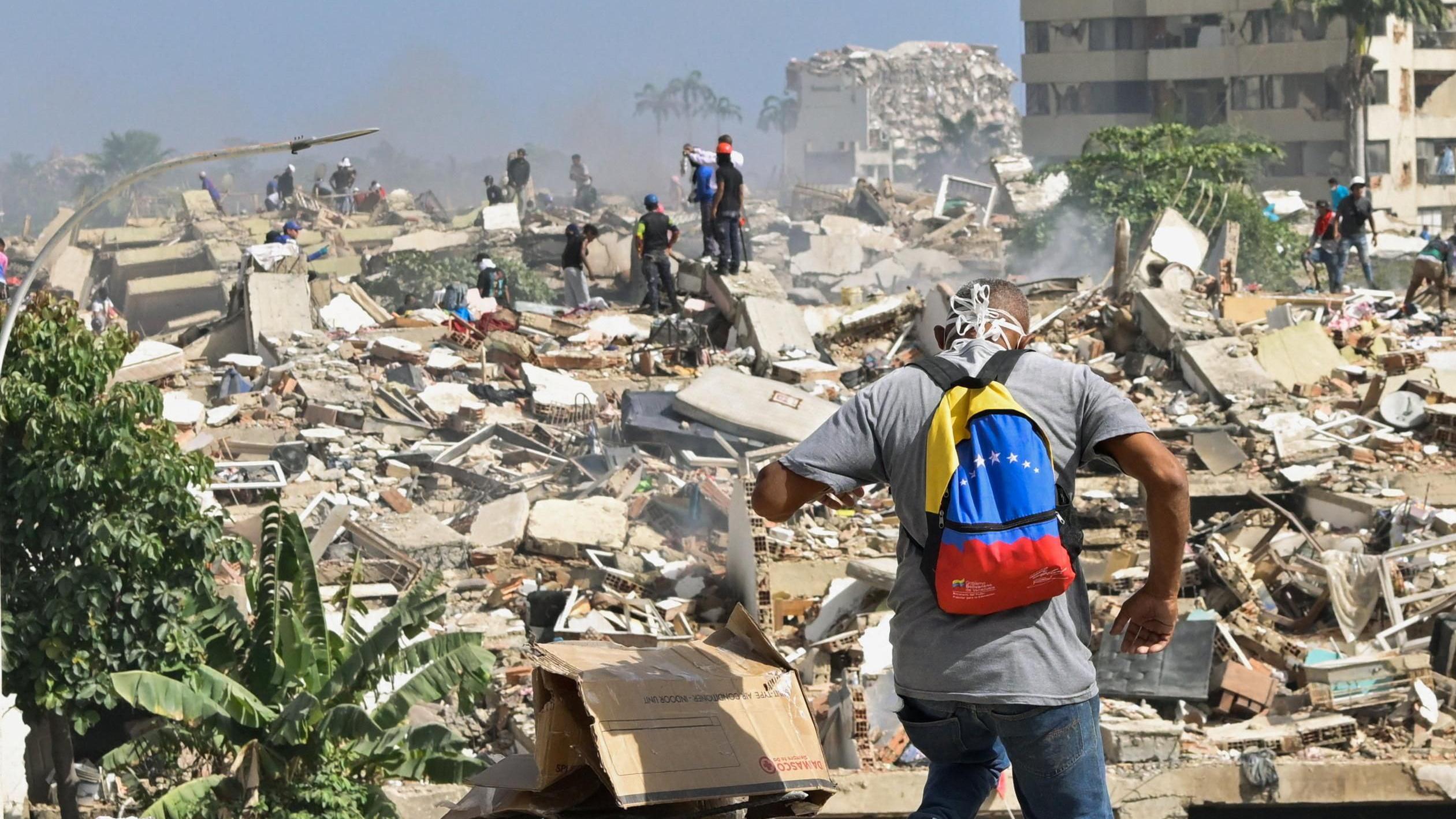
Expect more reflections on those conversations in the coming weeks, but for now, here is our usual roundup of news, research, jobs, and funder practice. This week, we range from World Bank accountability to democracy innovation to the case for organizational closure. Plus, we consider how civic space is critical to fast and effective disaster response, as our thoughts are with the victims of the earthquakes in Venezuela.
TAI team
What's New
The International Budget Partnership's Open Budget Survey 2025 marks 20 years of global budget transparency tracking. Transparency scores have risen 29 percent since 2008, but accountability has lagged behind. The report reminds us that disclosure alone is insufficient without effective oversight institutions and meaningful public engagement.
Well-timed for London Climate Action Week, GermanWatch released a new policy brief arguing that “international climate governance has entered a new phase in which the primary challenge is no longer negotiating rules but ensuring their effective implementation, raising ambition and ensuring transparency and accountability.”
Dasra's India Nonprofit Report 2026 examines one of the world's largest civic sectors with more than 515,000 registered nonprofits and 16 million employees. A survey of 438 nonprofits supplemented by expert interviews offers insights on funding, leadership, inclusion, and the role of civil society in translating public investment into last-mile impact.
Sophie Edwards covers the World Bank’s merging of three accountability mechanisms into one, and the battle over whether the new entity will follow the highest original standard or the lowest common denominator. It’s a debate worth close watching over the coming months.
Writing for the Open Government Partnership (OGP), Henri Verdier argues that artificial intelligence is transforming work, education, and democratic life, yet remains concentrated in the hands of a few companies with little international oversight. He calls for open and participatory governance before today's AI systems become entrenched infrastructure.
OGP also announced Democracy27, a new initiative that brings together 20 civil society organizations from across Europe and a task force of prominent former policymakers and public officials. The initiative seeks to understand declining trust in democracy and identify practical ways to strengthen participation, accountability, and democratic governance.
According to Altrata's World Ultra Wealth Report 2026, the global ultra-high-net-worth (UHNW) population grew 14.4 percent in 2025, its strongest expansion since 2017. The report projects more than 746,000 UHNW individuals with a combined $85 trillion in wealth by 2030, with Africa and Asia posting the fastest regional growth.
Writing in Portuguese for Comuá in partnership with Sociedade Viva, Christiane Sampaio explores how digital platforms and algorithms shape visibility in public debate. She argues that understanding these dynamics is increasingly important for protecting civic space and democracy in an environment shaped by disinformation and reputational attacks.
As aid cuts intensify debates around domestic resource mobilization, the oft-cited benchmark of raising tax revenues to 15 percent of gross domestic product (GDP) remains a key reference point. This Visual Capitalist graphic ranks countries by tax revenue as a share of GDP.
The International Budget Partnership identifies six pathways through which civil society contributes to more responsive governments and stronger fiscal governance. The framework highlights how change can emerge through different strategies, relationships, and institutional dynamics.
From Our Members
FORD FOUNDATION: Ford has named Ursula Burns, founder of Integrum and former CEO of Xerox, as the new chair of its Board of Trustees. Burns will be the first African American woman to serve as board chair in the foundation's 90-year history.
HUMANITY UNITED: Maria Kisumbi of Humanity United argues that the next UN Secretary-General cannot simply be a crisis manager. Published as the UN convenes its first-ever Peacebuilding Week, the piece calls for a renewed vision of peacebuilding that is locally led, grounded in community strengths, and shaped by civil society leadership.
MACARTHUR FOUNDATION: With new Pew Research Center data showing that half of Americans are more concerned than excited about artificial intelligence, MacArthur president John Palfrey and Omidyar Network CEO Michele Lawrence Jawando joined the TechStuff podcast to discuss Humanity AI, a philanthropic initiative focused on ensuring people have a say in shaping AI's future.
ESSENTIAL WATCHING:
Eurodad's Policy Forum 2026 brought together conversations on international tax, debt, and private finance through an economic justice lens. The panels are now available to watch online.
TOOLS AND TRENDS FOR FUNDERS
Avina Foundation's Paula Ellinger and Laura Señan reflect on three decades of work in Latin America and what it has taught the organization about funding real disruption, arguing in Alliance magazine that philanthropy should adapt its logic to the moment rather than rely on fixed plans (Paywalled).
Jennifer Nguyen of the Stupski Foundation writes how donor practices often discourage nonprofits from investing in their own infrastructure and long-term health. In a related video conversation with Vu Le, Nguyen unpacks some of the more limiting and harmful habits embedded in conventional philanthropy.
Not every nonprofit story ends in sustainability, and Yvonne Thomas, Elizabeth Stokely, and Alena Owen make the case that closure can sometimes be the most responsible choice an organization makes. Their new piece in Candid walks through what a well-executed, intentional wind-down actually looks like.
In Alliance magazine, Rachel Humphrey writes about donor accountability as an ongoing, visible, and relational practice, arguing that this kind of sustained accountability is what turns a learning process into genuine repair.
ESSENTIAL READING:
The new ethnographic study “Faith, Freedom, Family, Place” examines how many conservative Americans view departures from democratic norms as responses to institutions they believe have drifted from the country's founding values. Authors argue that democracy advocates may need to engage these concerns about legitimacy and values more directly.
Focused Topic of the Week
Shaken Ground: Civic Freedoms and the Future of Democracy in the Americas
Amid the devastating earthquakes in northern Venezuela, Marianna Belalba of the European Center for Not-for-Profit Law Stichting voices civil society leaders who are warning that government censorship and restrictions on civic space are hampering emergency response efforts. With limited information about the extent of the damage and barriers preventing NGOs from mobilising effectively, the crisis is a stark reminder that freedoms of association, expression, and access to information are not abstract rights—they are essential infrastructure for saving lives and coordinating humanitarian action. Of course, the disaster hit a country already facing political, governance, and financial crises.
Neighboring countries also face significant challenges. Elections in Colombia and Peru revealed highly divided populations and a sign that we might need to get used to political oscillations between left and right. In Colombia, far-right candidate Abelardo de la Espriella claimed victory in Colombia's preliminary vote count, succeeding leftist Gustavo Petro, while Keiko Fujimori has built a seemingly unassailable lead in Peru's elections. As the Civicus team notes, there is an increased prospect of an authoritarian turn to manage political instability.
The electoral shifts in both countries also mean a continent almost entirely aligned with Washington, with the possible exception of Brazil, which votes in November. According to CONNECTAS, this means that the "Shield of the Americas" is no longer a fringe geopolitical concept. The informal pact, already signed by Trump and 12 Latin American heads of state, is ostensibly to coordinate action against drug cartels, but the authors argue that it operates on ideological kinship and the capacity to crowd out rivals, creating ripple effects for the terms under which sovereignty in the region is exercised.
JOBS
Multiple openings - Hewlett Foundation
Multiple openings - MacArthur Foundation
Multiple openings - Open Society Foundations
Multiple Openings - Gates Foundation
Multiple Openings - Social Action, Development Cooperation, Culture, Disability, and Health Sectors in Spain
Multiple Openings - UNCAC Coalition
Multiple Openings - Equality Now Jobs
Director, Strategic Communications Network – Global Fund for a New Economy (GFNE)
Global Civics Partnerships Lead - YouTube
Policy Advisor for Natural Resource Justice - Oxfam America
Senior Director, Critical Minerals and Community Positive Energy Transition - World Wildlife Fund
Programmes Administration Consultant - Ariadne
Senior Development Manager - ClimateWorks Foundation
Chief Development Officer - National Democratic Institute.
Media and Communications Manager - Transparency International. Deadline: July 13, 2026.
CALLS
Collective Abundance has launched its Rebuilding the Social Fabric campaign, seeking to raise €100,000 to strengthen community-led climate justice efforts across Southern and Eastern Europe. The campaign will support participatory grantmaking, grassroots coalitions, and long-term movement infrastructure in Spain, Poland, and Greece.
Nine-month paid fellowship for investigative reporting projects, open to all regions, through Durham University and Reuters. Deadline: July 10, 2026.
Consultancy for UNDP Global Policy Centre for Governance, "Governance as De-Risking" workstream, Deadline July 10
AI Accountability Fellowships, Pulitzer Center, supporting journalists investigating how AI systems shape decisions in policing, medicine, social welfare, and criminal justice. Fellows receive up to $25,000 in funding, mentorship, and training. Deadline: July 12.
The Pulitzer Center has opened applications for a new cohort of Waki, a programme designed to strengthen and amplify trusted voices across Latin America that create content on environmental and territorial issues.
Democracy Stories Lab, People Powered. An open call for creators worldwide to share visual stories about collective decision making, voice, fairness, and power. Deadline: July 14.
Consultant or team to develop a Regional Advocacy Roadmap on the Enabling Environment for Civil Society in Latin America and the Caribbean, Forus. Deadline: July 20.
Call for nominations to the WINGS Board of Directors. Applications open until July 31 at 23:00 UTC
People Powered is accepting applications for two global programmes offering funding and mentorship to democracy changemakers working to strengthen participation and civic engagement worldwide.
Democracy Stories Lab, an open call by People Powered, invites creators worldwide to submit short videos, illustrations, or graphics imagining a more democratic future. Selected submissions will receive cash prizes and amplification through People Powered and the Democracy Narratives Alliance networks. Applications open from July 14 to September 14, 2026.
The European Endowment for Democracy provides rolling funding for local democracy organizations in the Eastern Partnership, Middle East and North Africa, and Western Balkans & Turkey.
The Fifth Element invites blog contributions on systems transformation from practitioners and researchers, drawing on both lived experience and analysis across diverse perspectives.
Thousand Currents will host its first Academy in the Global South this August in Brazil, focused on internationalism and global solidarity, including immersive engagement with social movements shaping transformative change. August 2-7, 2026 | São Paulo, Brazil.
CALENDAR
2026 Gender IFI Summer School series (6-free online learning sessions). From 22nd June to 2nd July 2026
Introducing Tulsi Platform: A women-led global platform rooted in Global South knowledge and practices while navigating Northern systems and structures. June 24th, 2026 - 8:00 AM Mexico City / 10:00 AM NYC / London 3:00 PM
Launch of the Results of the 2025 OECD Survey on Drivers of Trust in Public Institutions, webinar, June 29, 14:00 CEST.
OGP's Open Algorithms Network webinar on practical approaches to participatory AI governance, June 29, 15:00 to 16:00 CEST.
How funders are responding to attacks on democracy and civic space.Human Rights Funders Network (HRFN), Open Society Foundations President Binaifer Nowrojee, and political leader Stacey Abrams- June 30, 2026
Addis Tax Initiative Webinar: "Taxpayer Education in ATI Partner Countries: Foundation and Practice." July 1, 2026, 14:00-15:30 CET.
Foresight workshop on the future of democratic participation, European Center for Not-for-Profit Law, July 2, 10:30 CET
IAFFE Annual Conference. June 25–26, 2026 (online) | July 9–11, 2026 (in person) | Cali, Colombia.
WINGSForum 2026 in Montreal under the theme "ACT – Activate, Collaborate, Transcend." Save the date, more details to follow in early 2026. September 28-30, 2026.
2026 EITI Global Conference. October 8-9, 2026, Brussels, Belgium.
Better Politics Foundation Flagship Gathering - Brussels, November 18–20, 2026.
International Anti-Corruption Conference (IACC) in Punta Cana, Dominican Republic. December 1-4, 2026.
We’d love to hear from you on how we can further improve TAI Weekly to better serve your needs in program management on the transparency, accountability, improved grantmaking and civic space. Please direct your feedback to [email protected] or